
Nubia's Forgotten Kingdoms
A Brief History of Christian Nubia

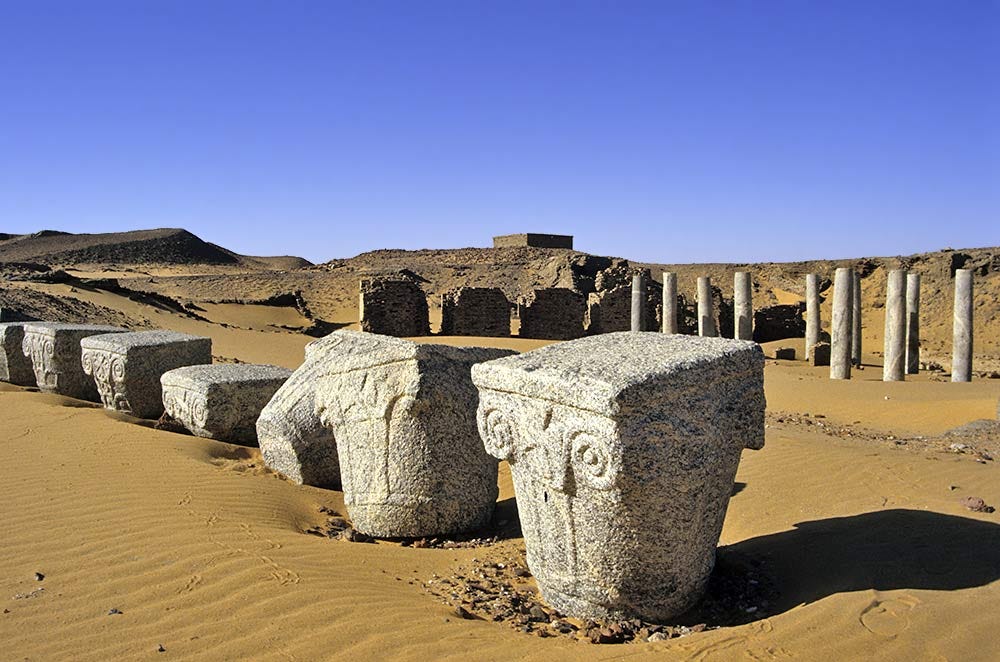
Nubia’s geographical position as a physical mediator between the Mediterranean and Sub-Saharan Africa not only served economic purposes but also ones of cultural and religious exchange. Missionaries from Egypt and the Eastern Roman Empire introduced Christianity to the Nubian kingdoms (5th-6th centuries), resulting in the official adoption of the religion by the state. The kingdom of Makuria, in particular, asserted its dominance as a Christian kingdom, and it halted the Islamic expansion through the negotiation of a treaty (baqt) that preserved the Christian character of the Nubians. Although often overlooked, Nubia was deeply embedded in the fabric of Mediterranean and broader African history. The three Christian kingdoms, Nobatia, Makuria, and Alwa, reinforced the spread of Christianity on the African continent, further substantiating its universality.
Early Contacts & The Introduction of Christianity
Egypt was a vital foundation for the early development of Christianity. From it emerged the Coptic Church, whose liturgical and monastic traditions stretched its influence throughout the Christian world and further into the African continent. Under Eastern Roman control, however, Empress Theodora and the Alexandrian patriarch directed their religious efforts toward the Nubian royal courts. Emperor Justinian I and Theodora desired a consolidation of Christianity in Egypt and Nubia because religious alignment solidified imperial support. In practice, this was quite difficult due to the tensions caused by a doctrinal disagreement occurring at the Council of Chalcedon in 451 AD, which resulted in a schism between Egypt and Eastern Rome. The Nubians ultimately aligned themselves with the Egyptians, receiving spiritual guidance from the Copts and affirming their loyalty to the ecclesiastical communion between them and the Coptic church. There was also a shared history during the earlier introduction of Christianity in relation to the decline of the pagan religions in Egypt and Nubia, in addition to the rapid acceptance of the religion while maintaining aspects of local culture.
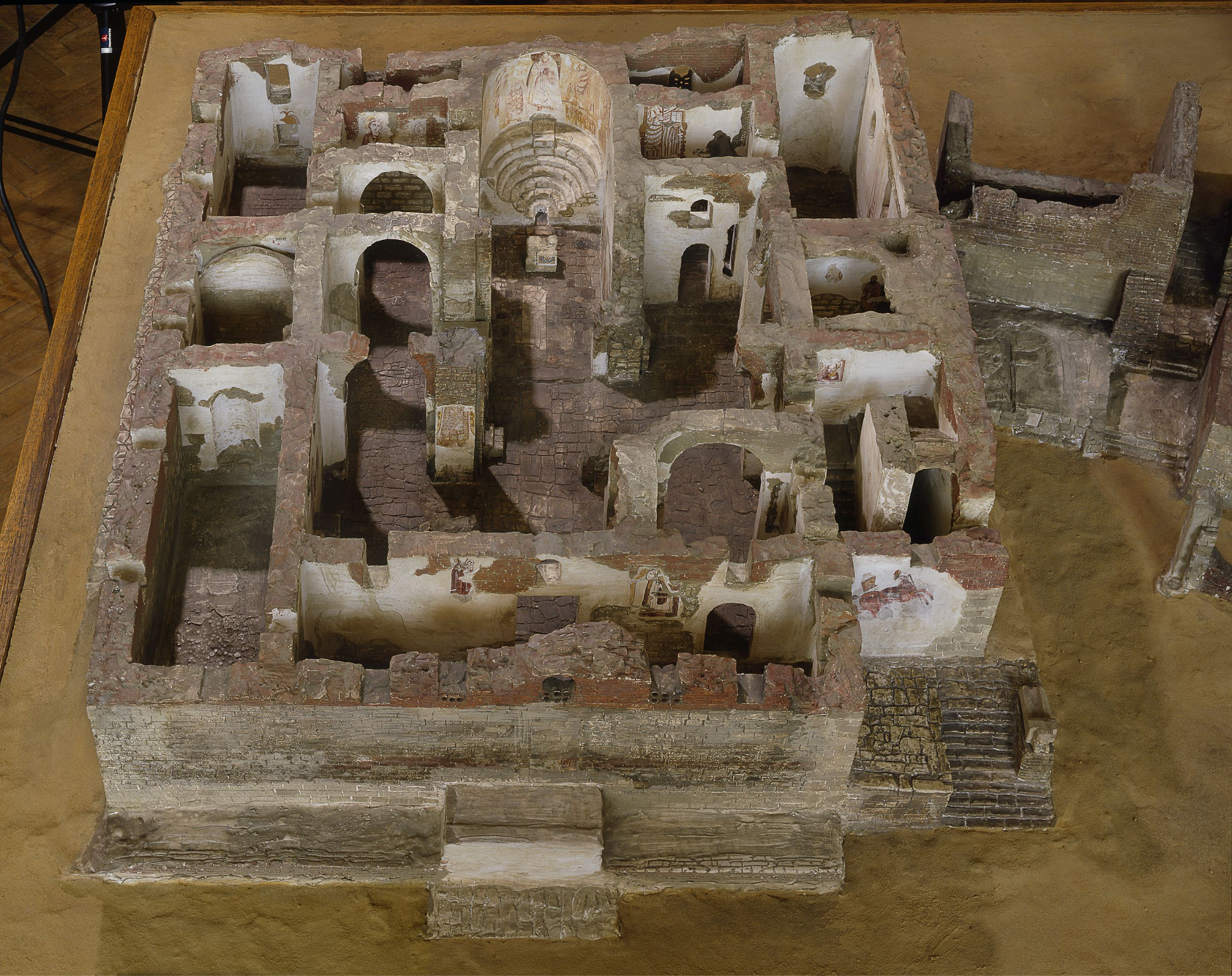
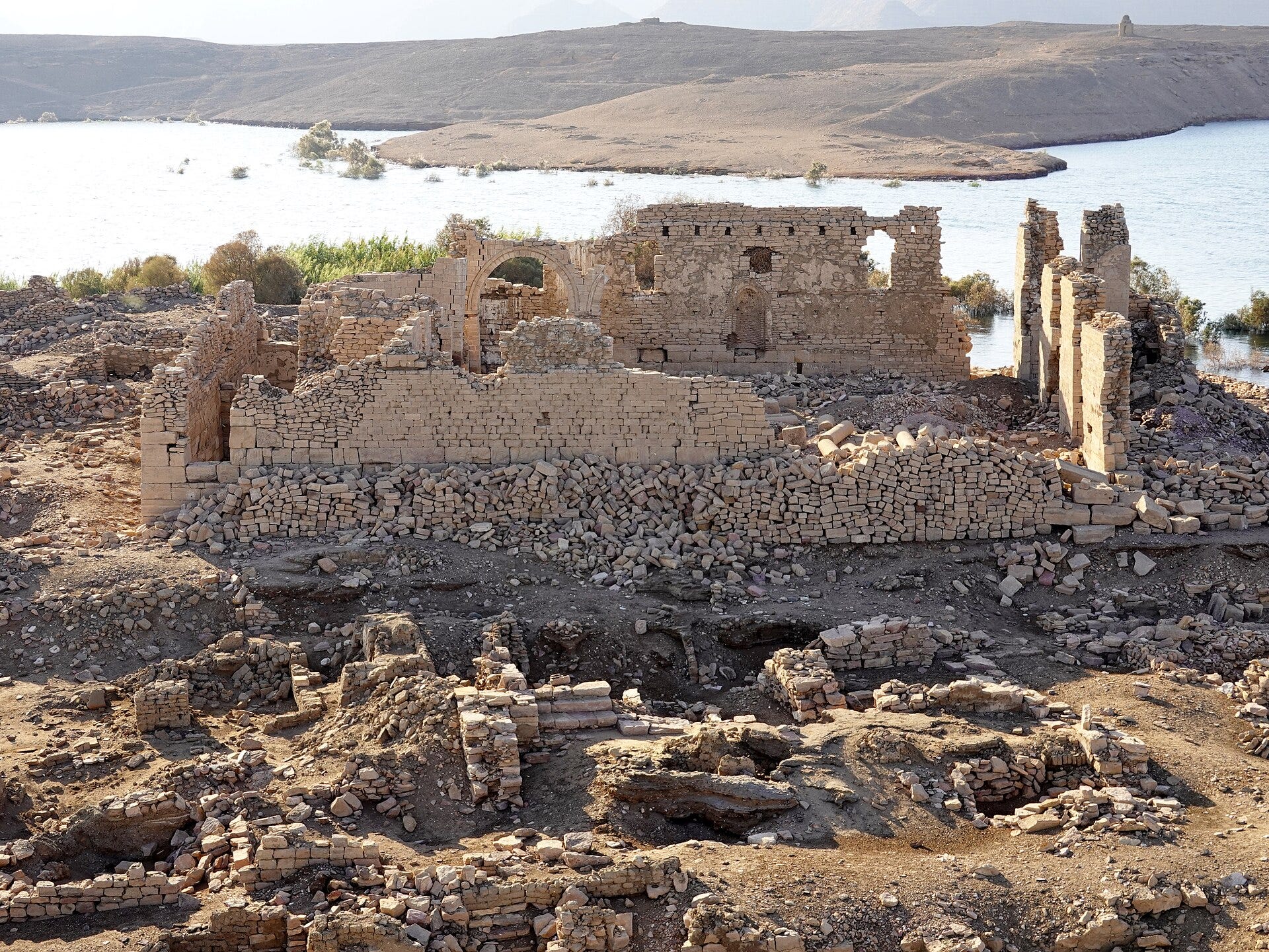
Archeological discoveries at Faras reveal the remains of an earlier church beneath the 8th-century cathedral, dating back to the 4th-century. This finding cements evidence for the existence of Christian communities even before the official royal adoption of the religion. Qasr Ibrim also served as a site for early Christian communities living alongside pagans, with burials from both groups found together. Despite the gradual spread of Christianity, the pagan temple at Qasr Ibrim remained in use into the 6th century.
Christian Nubia: Religion & Art
Christian Nubia integrated elements of Byzantine and Coptic liturgical practices as well as iconographical styles during the medieval period. This synthesis was mainly driven by the political interests of the Eastern Roman Empire, along with the proliferation of the Christian message by Egyptian missionaries who brought a deeply religious and artistic tradition. The ecclesiastical structure of Nubian Christianity reflected Eastern Roman influence as well, including architectural arrangements necessary for liturgical functions. Greek and Coptic were the dominant languages utilized for written texts, including liturgical ones (Liturgy of the Presanctified Gifts), of which both appeared in church inscriptions. The two languages maintained a symbiotic relationship, since Coptic harnessed the Greek alphabet. Greek served administrative functions and official documents, while Coptic was used more selectively, for devotional contexts. Throughout the years, the Coptic language was adapted and modified to meet the local needs of Nubian villages. Books and hymns, for example, were sometimes translated into the Nubian language.
However, there has been in the Berlin Museum since the last century a parchment book in the Nubian language of this area, and it begins with precisely the same text as the first composition in our Coptic book. The Nubian book was dedicated in A.D. 973 to the church at Serra East, a site just above the Egyptian-Sudanese border, less than 15 miles south of Qasr el-Wizz. (Hughes, 1966).
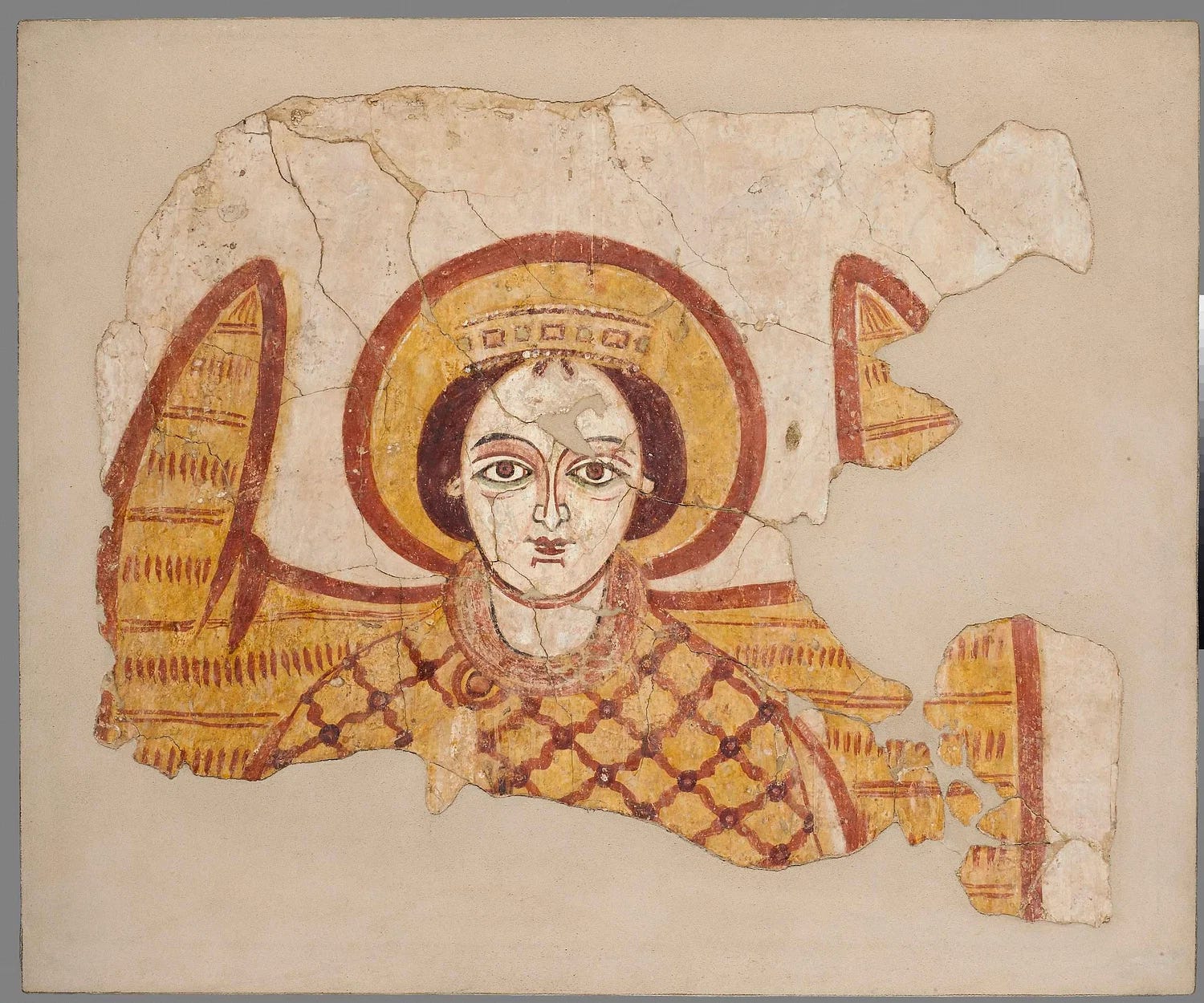
This close relationship between Coptic and Nubian traditions contributed to a dynamic religious culture, demonstrated by the artistic choices used to represent holy figures. It was the deliberate employment of color schemes and symbolic motifs in paintings that emphasized how local cultures mold external influences into a personalized religious identity. Nubian iconography mirrored Byzantine archetypes with archangels wearing loros and saints depicted in culturally specific poses, revealing that Christianity can flourish even within insular ethnic communities.
Political & Ecclesiastical Structure
The church played a central role in the political governance and social organization of medieval Nubia. Bishops, priests, and eparchs (diplomatic and ecclesiastical officials) handled local taxation and relations with neighboring communities. As Christianity became the official state religion, the religious duties of cathedrals and monasteries granted governmental legitimacy to the monarchs through coronations and public blessings. Leaders within these institutions directed the cultural and moral atmosphere of the society over which they presided, and their influence was exercised within the schemas that formed their civilization. Even during the Islamic period, Christianity remained as a stabilizing force that anchored the social structure of Nubia until Islamic transformation.
The kingdoms of Nobadia and Makuria later became intertwined as a result of the sociopolitical changes that unfolded in the North with the spread of Islam. This union was sealed by the reign of King Merkurios (referred to as the “new Constantine”) of Macuria. Although Nobadia’s distinct identity remained, Makuria displayed its dominance through strategic political decision-making and by forming a federation that still represented the people of Nobadia. The result was a unified Nubia that endured until the 11th century, illustrating the historical role of Christianity as a tangible reality that determined a society’s state of being.
The adoption and proliferation of Christianity across kingdoms, such as Makuria, strengthened diplomatic relations with surrounding Christian communities. Trade flourished in the capital of Old Dongola, and commercial activity was active.
Following the Arab conquest, Nubia negotiated the baqt, which was a formal treaty with Islamic Egypt that blended diplomacy and trade. The Christians protected themselves by ensuring their fixed borders were maintained, safe passage for local merchants was allowed, and various exchanges of material goods occurred in a town near Aswan. Remarkably, the baqt lasted for about six centuries, even through the gradual transformation of the region; the economic exchanges remained.
Nubia became a mediating symbol during the expansion of the Islamic Empire, and Christians in the Oriental world, making pilgrimage to Jerusalem, traveled through Nubia on their journey to Jerusalem. Their passage functioned as a cultural and artistic exchange that mirrored memories of the past.
Decline
Arab incursions were the primary catalyst for the decline of Christian Nubia. Although the Arabs were initially forced into a stalemate, the pressures of the baqt treaty (which involved the exchange of slaves for peace with Islamic Egypt) suffocated the Nubian economy in combination with political changes occurring in the region. Eventually, the Christian kingdoms of Nubia came to a conclusion with the spread of Islam in the region; the population and culture were fragmented by Mamluk raids, which made possible the political reign of Islamic elites. The cathedral of Dongola was converted to a mosque by Abdallah Barshambu in Makuria, and while Islam was at first the religion of the rulers, it trickled into the urban centers and the countryside through gradual change. By 1504, the Funj Sultanate utilized Islam to legitimatize its authority by leveraging the unifying concept of the Ummah to centralize power. This addition to the Nubian and greater Egyptian superstructure established Islamic law in these lands, where the masses became absorbed into a greater Muslim society. Once again, revealing the synonymous nature of Islamization and Arabization. Even though this remains the reality, remnants of pre-Islamic Nubia remain preserved underneath the sands and within the various cultural practices of modern Nubian communities.
References
Hughes, G. R. (1966). A Coptic liturgical book from Qasr el-Wizz in Nubia. Oriental Institute Annual Report, 1965–1966.
Van der Vliet, J., Adams, W. Y., Adams, N. K., Barnard, H., Derda, T., Łajtar, A., Dijkstra, J. H. F., Godlewski, W., Hallof, J., Khan, G., Muhs, B., & Ruffini, G. R. (2014, May 2). Qasr Ibrim, between Egypt and Africa: Studies in cultural exchange. Bryn Mawr Classical Review.
Welsby, D. A. (2002). The medieval kingdoms of Nubia: Pagans, Christians and Muslims along the Middle Nile. British Museum Press.